

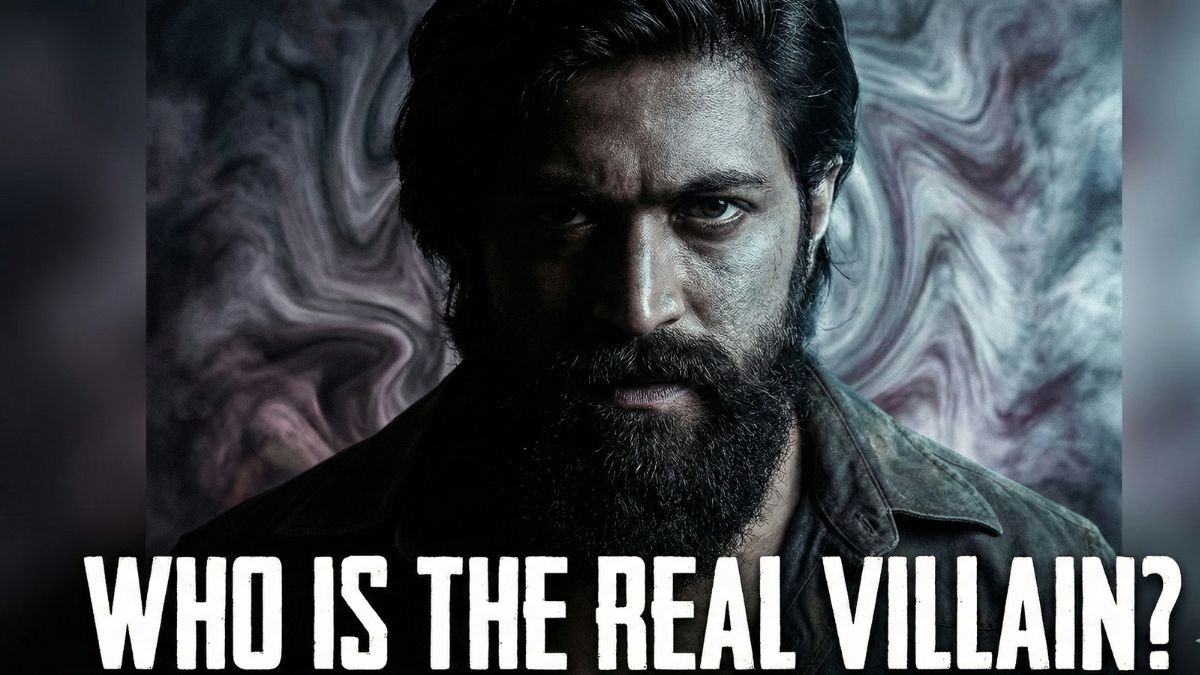
Who Is the Villain in Toxic? The Question Every Yash Fan Is Asking
Let me ask you something.
When you hear the word villain, who do you picture?
A man with a weapon.
A criminal empire.
A dark force waiting to be defeated.
Now forget all of that.
Because if early buzz around Yash’s upcoming film Toxic is even half true…
…the biggest villain may not be standing in front of him.
He may be living inside him.
And that possibility is exactly why this film already feels dangerous.
The Villain Question No One Can Answer Yet
One of the strangest things about Toxic is this:
Despite months of discussion, set leaks, and first-look reactions…
there is still no confirmed villain name.
No official antagonist announcement.
No “meet the baddie” poster.
No marketing-driven reveal.
For a big star film, that silence is unusual.
And in cinema, unusual usually means intentional.
Why Toxic Doesn’t Feel Like a Hero-vs-Villain Film
From the moment the title was revealed, the tone was clear.
Toxic is not promising a mass showdown.
It’s promising a psychological one.
The first look of Yash didn’t show power.
It showed tension.
It didn’t sell heroism.
It suggested instability.
That alone hints that the film may not follow the classic “hero defeats villain” formula.
The Director’s Style Changes Everything
This film is being directed by Geetu Mohandas.
And that detail matters more than most people realize.
Her films are not about loud villains.
They’re about:
- Inner conflict
- Moral collapse
- Psychological consequences
She doesn’t build monsters outside characters.
She exposes the ones within.
Which makes one thing very clear:
If Toxic follows her storytelling language, the villain won’t just be a person.
It will be a condition.
So… Who Could the Villain Be?
Here are the three strongest possibilities fans and insiders are quietly circling.
1️⃣ The Villain Is the System
One strong theory is that Toxic doesn’t give Yash a single enemy.
Instead, it places him inside a corrupt, decaying system.
Power structures.
Control mechanisms.
Moral rot.
In this setup, there is no face to punch.
Only a structure to survive.
That would make Toxic less about revenge…
…and more about suffocation.
2️⃣ The Villain Is Someone Close
Another angle fans are obsessed with.
What if the villain isn’t introduced as a villain at all?
What if they arrive as:
- A friend
- A partner
- A guide
And slowly reveal themselves.
That kind of antagonist doesn’t fight physically first.
They dismantle emotionally.
And those betrayals always hurt more than any gunfight.
3️⃣ The Villain Is Yash Himself
This is the theory that refuses to go away.
And it’s the most unsettling one.
What if Yash’s character is:
- Morally broken
- Addicted to power
- Emotionally hollow
What if the film isn’t about defeating evil…
…but recognizing it?
The title Toxic suddenly stops feeling metaphorical.
And starts feeling diagnostic.
Why Makers Are Hiding the Villain on Purpose
Big films usually announce villains early.
It builds hype.
It creates conflict.
It sets expectations.
Toxic is doing the opposite.
Which suggests one thing:
Revealing the villain might spoil the film’s core idea.
If the antagonist is tied directly to:
- The hero’s psychology
- The story’s twist
- Or the film’s moral question
…then marketing silence is the smartest strategy.
Why Yash’s Casting Makes This More Interesting
After KGF, audiences associate Yash with dominance.
Control.
Alpha presence.
Certainty.
Toxic seems designed to strip that away.
To show:
- Weakness
- Confusion
- Internal chaos
If that’s true, then the real battle isn’t external.
It’s identity.
And identity conflicts don’t need traditional villains.
They need mirrors.
What This Means for the Film’s Tone
If Toxic truly avoids a conventional villain, expect:
- Fewer heroic elevations
- More uncomfortable scenes
- Emotional damage over physical violence
This won’t be a film where you clap when the villain enters.
It may be one where you go silent.
Why This Approach Is a Huge Risk
Let’s be honest.
Indian commercial cinema loves clear enemies.
Audiences like knowing who to hate.
Toxic seems prepared to deny that comfort.
And films that remove emotional clarity always divide viewers.
Some will call it brilliant.
Some will call it boring.
Some will leave confused.
But no one will call it forgettable.
The Question You Should Be Asking Instead
Not:
“Who is the villain?”
But:
“What is the poison?”
Because the answer to that defines the entire story.
Is it power?
Is it trauma?
Is it addiction?
Is it ambition?
Is it guilt?
Whatever Toxic chooses…
that will be the real antagonist.
Final Takeaway (Read This Carefully)
If you’re searching for the villain of Toxic, you might be missing the point.
This film doesn’t seem interested in giving Yash someone to fight.
It seems interested in giving him something to face.
And the most dangerous enemies in cinema history…
were never the ones holding weapons.
They were the ones living inside the hero’s mind.